
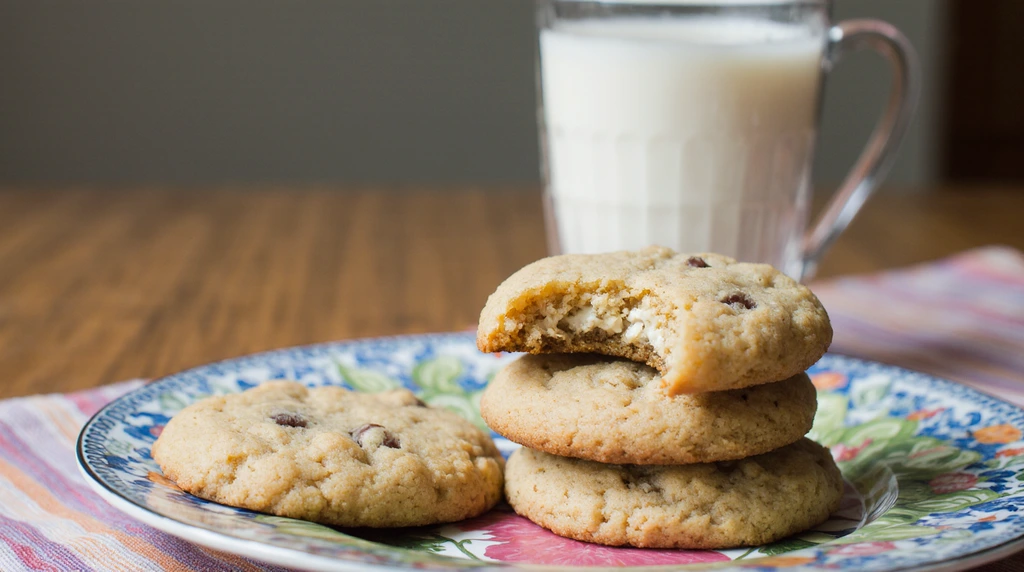
Okay, so high protein cottage cheese cookies sound absolutely disgusting, right? When my sister first told me about them, I literally laughed in her face. Cottage cheese. In cookies. Like, the chunky white stuff that looks like it’s already been chewed? That cottage cheese? No thanks.
But then she made me try one and I was like… wait. What? These are actually good? How is this possible? So naturally, I had to figure out how to make them myself because I’m not about to let my sister be better at anything than me. Sibling rivalry is real, people.
Now I make these high protein cottage cheese cookies like twice a week, and my kids have no idea there’s cottage cheese in them. They just think they’re getting cookies for breakfast. Which they are. But they’re also getting like 15 grams of protein. Parenting win.
The Day I Discovered high protein cottage cheese cookies Were a Thing
This whole thing started because I was trying to eat more protein. Apparently, protein is good for you or whatever. But I was so tired of eating the same boring stuff—eggs, chicken, protein shakes that taste like disappointment. I was complaining to my sister about it, and she goes, “Have you tried cottage cheese cookies?”
I thought she was messing with me. Like, this was some kind of prank. But she pulled up a recipe on her phone and showed me. People on the internet were losing their minds over these high protein cottage cheese cookies. TikTok was obsessed. Instagram fitness people were making them. It was a whole thing.
I was skeptical. Very skeptical. But also curious. So I tried making them last Tuesday, and I completely messed up the first batch because I didn’t blend the cottage cheese enough and they came out lumpy and weird. My husband took one bite and said, “What did cottage cheese ever do to you?” Rude, but fair.
Second batch though? Perfect. Absolutely perfect. And now I’m that annoying person telling everyone about high protein cottage cheese cookies.
The Basic Recipe That Changed My Life
Alright, here’s the deal with these high protein cottage cheese cookies. They’re stupid simple. Like, embarrassingly simple. You basically need four ingredients. FOUR. I’ve made regular cookies that required like fifteen ingredients and three hours. These take ten minutes.
What You Actually Need for high protein cottage cheese cookies:

- 1 cup cottage cheese (I use the full-fat kind because I’m not a monster, but low-fat works too)
- 1 cup quick oats (not the steel-cut ones, those don’t work—learned that the hard way)
- 2 eggs
- 1/4 cup maple syrup or honey
- 1 tsp vanilla extract (okay that’s five ingredients, I lied)
- Pinch of salt
- Optional but highly recommended: chocolate chips, because life is short
That’s it. That’s the whole thing. No flour, no butter, no complicated stuff. Just dump everything in a blender and make cookies.
Here’s How You Do It:
First—and this is CRITICAL—you need to blend the cottage cheese until it’s completely smooth. Like, blend it for a full minute. Maybe two minutes. I know it seems like overkill, but trust me on this. If you don’t blend it enough, you’ll have chunky cookies, and nobody wants that. Not even people who like cottage cheese.
So throw the cottage cheese in a blender or food processor. Blend until smooth. Add the eggs, maple syrup, vanilla, and salt. Blend again. Then add the oats and pulse a few times until everything’s mixed. Don’t over-blend the oats though—you want some texture.
The batter should be thick but pourable. Kind of like thick pancake batter. If it’s too thick, add a tiny splash of milk. If it’s too thin… well, I’ve never had that problem, so I don’t know what to tell you.
At this point, you can add whatever mix-ins you want. I usually do chocolate chips because I’m basic like that. Sometimes I add blueberries. Once I added M&Ms and my kids thought I was the coolest mom ever for like five whole minutes.
Line a baking sheet with parchment paper. This is important because these high protein cottage cheese cookies can stick if you don’t. Scoop the batter onto the sheet—I use an ice cream scoop because I’m fancy, but a spoon works fine. They won’t spread much, so whatever size you make them is what you get.
Bake at 350°F for about 15-18 minutes. They should be golden brown on the edges but still soft in the middle. Don’t overbake them or they’ll be dry. And dry protein cookies are sadness in food form.
Let them cool for like five minutes before you try to eat them. I know it’s hard to wait, but hot cookies will fall apart. Cold cookies are perfect.
Why These high protein cottage cheese cookies Work (Even Though They Shouldn’t)
I still don’t fully understand the science behind why high protein cottage cheese cookies actually taste good. Like, cottage cheese is wet and chunky. Cookies are supposed to be… not that.
But somehow, when you blend the cottage cheese completely smooth and mix it with oats and eggs, it creates this texture that’s weirdly cookie-like. They’re softer than regular cookies—more like a thick muffin top, but in a good way. They hold together, they taste sweet, and you absolutely cannot taste the cottage cheese.
My friend Emily didn’t believe me about the cottage cheese thing. She was convinced I was lying. So I made her watch me make a batch, and she kept saying, “There’s no way these are going to taste good.” Then she ate three of them and asked for the recipe. Vindication tastes sweet, Emily.
The protein content is legit too. Each cookie has about 5-6 grams of protein, depending on how big you make them. Eat three for breakfast and you’ve got like 15-18 grams of protein. That’s more than most “protein bars” from the store, and those taste like cardboard wrapped in chocolate.
The Mistakes I Made So You Don’t Have To
Mistake #1: Not blending the cottage cheese enough. I already mentioned this but it’s worth repeating. BLEND IT SMOOTH. Lumpy cookies are not cute. They’re not rustic. They’re just bad.
Mistake #2: Using steel-cut oats. I thought “oats are oats, right?” WRONG. Steel-cut oats are too hard and don’t break down properly. You end up with cookies that are weirdly crunchy and not in a good way. Use quick oats or regular rolled oats.
Mistake #3: Making them too big. I made giant cookies the first time because I wanted less work. They didn’t cook through properly. The middle was still raw while the outside was done. Make them smaller—like 2 tablespoons of batter per cookie.
Mistake #4: Skipping the parchment paper. These high protein cottage cheese cookies WILL stick to your pan without parchment paper. I had to soak my baking sheet for like an hour. Learn from my suffering.
Mistake #5: Overbaking them. I left them in for 20 minutes once because I got distracted by a phone call. They came out dry as the Sahara Desert. Watch the timer. Set two timers. Set three. Whatever it takes.
Ways to Make These Even Better

The basic recipe is great, but here’s how I mix it up when I’m feeling fancy (or bored):
Chocolate Peanut Butter Version: Add 2 tablespoons of cocoa powder and 2 tablespoons of peanut butter to the batter. Tastes like a Reese’s cup. My son would eat these for every meal if I let him.
Blueberry Lemon: Add a handful of blueberries and the zest of one lemon. Suddenly you have “fancy” cookies that you could serve to guests. Not that I’ve done this. But I could.
Cinnamon Roll Style: Add 1 tablespoon of cinnamon to the batter and swirl in a tiny bit of cream cheese frosting on top before baking. Okay this makes them less healthy but they taste AMAZING.
Apple Cinnamon: Chop up a small apple really fine, add it to the batter with some cinnamon. Tastes like fall in cookie form. Very Instagram-worthy.
Triple Chocolate: Add cocoa powder to the batter AND chocolate chips AND drizzle melted chocolate on top after baking. This is for when you’re pretending to eat healthy but actually just want chocolate.
The best part about these high protein cottage cheese cookies is that you can basically add whatever you want and they’ll still work. I’ve thrown in dried cranberries, nuts, coconut flakes, even crushed pretzels once (don’t knock it till you try it).
What My Kids Think of high protein cottage cheese cookies (And Don’t Think)
My kids have been eating these for like three months and they have NO IDEA there’s cottage cheese in them. None. Zero. They think they’re just “mom’s special cookies.”
Last week, my daughter asked if she could have cottage cheese cookies for breakfast and I was like “sure!” My mother-in-law was visiting and she gave me this look like I was the worst parent ever. Then I explained what they actually were and she tried one and was like, “Oh. These are actually quite good.” Thanks for the vote of confidence, Linda.
My 6-year-old calls them “breakfast cookies” and thinks he’s getting away with something. He’s not wrong—they ARE cookies. But they’re also basically oats, eggs, and protein. So yeah, you can have cookies for breakfast. That’s the magic of high protein cottage cheese cookies.
My husband was the hardest sell. He’s weirdly picky about protein foods. He won’t touch protein bars, protein shakes, anything labeled “protein.” But these? He eats them. He doesn’t even ask what’s in them anymore. He just grabs one on his way out the door in the morning.
high protein cottage cheese cookies Conversation
Can we talk about how weird cottage cheese is for a second? It’s like someone looked at milk and said, “You know what this needs? To be chunky.” And somehow that became a thing people eat.
I never liked cottage cheese growing up. My mom used to eat it with pineapple and I thought it was the grossest thing ever. The texture was wrong. The look was wrong. Everything about it was wrong.
But then the internet discovered that blended cottage cheese is basically just creamy protein, and suddenly everyone’s putting it in everything. Smoothies, pancakes, ice cream, cookies. It’s like the food world suddenly realized cottage cheese is secretly useful if you just… don’t look at it or think about what it is.
And honestly? They’re right. When you blend cottage cheese smooth, it’s basically just thick, protein-rich cream. You can’t taste that weird tangy flavor. You can’t see the lumps. It’s just protein magic that makes your food better.
I still won’t eat cottage cheese straight from the container. But in these high protein cottage cheese cookies? I’m obsessed.
The Protein Math – high protein cottage cheese cookies (For People Who Care)
Alright, so here’s roughly what you’re getting nutrition-wise. This is approximate because I’m not a nutritionist, I’m just someone who makes cookies:
Each cookie (if you make 12 cookies from this recipe):
- About 5-6g protein
- Around 80-100 calories
- Less than 10g carbs
- Minimal added sugar (just what’s in the maple syrup)
- Some fiber from the oats
Compare that to a regular cookie:
- Maybe 1-2g protein
- 150+ calories
- Tons of sugar
- Zero nutritional value except joy
So basically, these high protein cottage cheese cookies are regular cookies but with protein and less guilt. Not zero guilt—they’re still cookies. But less guilt.
If you eat three of these for breakfast, you’re getting 15-18g protein, which is a pretty solid breakfast. That’s more protein than most people get at breakfast unless they’re eating like five eggs or something.
When to Make high protein cottage cheese cookies (And When Not To)
Good times to make high protein cottage cheese cookies:
- Sunday meal prep for the week
- When you need a quick breakfast option
- When your kids are asking for cookies but you want them to eat something vaguely healthy
- When you’re trying to eat more protein but you’re tired of boring food
- 2 AM when you can’t sleep and need to stress-bake (been there)
Bad times to make these:
- When you’re trying to impress a hardcore baker (these are not fancy cookies)
- When you don’t have cottage cheese and think you can substitute something else (you can’t)
- When you’re expecting them to taste exactly like regular cookies (they don’t, they’re their own thing)
- When you only have 5 minutes (they take at least 25 minutes including baking time)
Real Talk About These high protein cottage cheese cookies
Here’s the honest truth: these high protein cottage cheese cookies are not going to win any baking competitions. They’re not going to make you famous on Instagram (unless you lie and don’t tell people what’s in them). They’re not going to replace your grandma’s chocolate chip cookie recipe.
But they’re good. They’re actually, legitimately good. And they’re useful. I have them in my fridge right now. My kids grab them for snacks. My husband eats them before the gym. I eat them for breakfast when I’m running late (which is always).
They’ve solved my “I need protein but I’m tired of eggs” problem. They’ve solved my “kids want cookies but I don’t want to give them sugar bombs” problem. They’ve even solved my “I bought cottage cheese and now I don’t know what to do with it” problem.
Are they perfect? No. But they’re easy, they’re filling, they’re high in protein, and most importantly, they don’t taste like a gym sock. That’s a win in my book.
My Final Thoughts on high protein cottage cheese cookies (Before I Go Make Another Batch)
I never thought I’d be the person recommending cottage cheese cookies to people. Like, six months ago if someone had told me I’d be writing about high protein cottage cheese cookies, I would have laughed.
But here we are. I’ve made probably 30 batches of these at this point. I’ve experimented with different add-ins. I’ve converted multiple skeptical friends. I’ve successfully hidden vegetables (well, protein) from my children.
The best part? They’re so easy that even on my most chaotic mornings, I can throw together a batch while half-asleep. Which is how I usually make them, honestly.
So if you’re looking for a way to eat more protein without forcing down another protein shake, or if you want to give your kids cookies without feeling like a terrible parent, or if you just want to try something weird that somehow works—make these high protein cottage cheese cookies.
Just blend the cottage cheese really well. Seriously. I cannot stress this enough. Blend it smooth.
Now excuse me while I go eat three of these for breakfast and pretend it’s a balanced meal. Because technically it kind of is. 🍪
check more recipes like this : High-Protein Breakfast Muffins (165 calories, 14g protein)
Table of Contents
High Protein Cottage Cheese Cookies
Easy high protein cottage cheese cookies made with just 4 simple ingredients! These healthy, delicious cookies pack 5-6g protein each and you can't taste the cottage cheese at all. Perfect for meal prep, breakfast cookies, or healthy snacks. Kid-approved and ready in 25 minutes.
Ingredients
- 1 cup cottage cheese (full-fat or low-fat)
- 1 cup quick oats or rolled oats
- 2 large eggs
- 1/4 cup maple syrup or honey
- 1 teaspoon vanilla extract
- Pinch of salt
- 1/3 cup chocolate chips (optional but recommended)
- Additional mix-ins like blueberries, nuts, or cinnamon (optional)
Instructions
-
Step 1Preheat oven to 350°F (175°C). Line a baking sheet with parchment paper. This is essential to prevent sticking.
-
Step 2Add cottage cheese to a blender or food processor. Blend for 1-2 minutes until completely smooth with no lumps remaining. This step is critical for texture.
-
Step 3Add eggs, maple syrup, vanilla extract, and salt to the blended cottage cheese. Blend again until well combined and smooth.
-
Step 4Add quick oats to the blender. Pulse several times until oats are incorporated but still have some texture. Don't over-blend. The batter should be thick but pourable, similar to thick pancake batter.
-
Step 5Transfer batter to a bowl and fold in chocolate chips or other desired mix-ins like blueberries, nuts, or cinnamon.
-
Step 6Using an ice cream scoop or spoon, drop about 2 tablespoons of batter per cookie onto the prepared baking sheet. Space them about 2 inches apart. These cookies won't spread much during baking.
-
Step 7Bake for 15-18 minutes until edges are golden brown but centers are still soft. Do not overbake or cookies will be dry. They should look slightly underdone in the center.
-
Step 8Let cookies cool on the baking sheet for 5 minutes before transferring to a wire rack. Store in an airtight container in the refrigerator for up to 5 days. Can also be frozen for up to 3 months.