
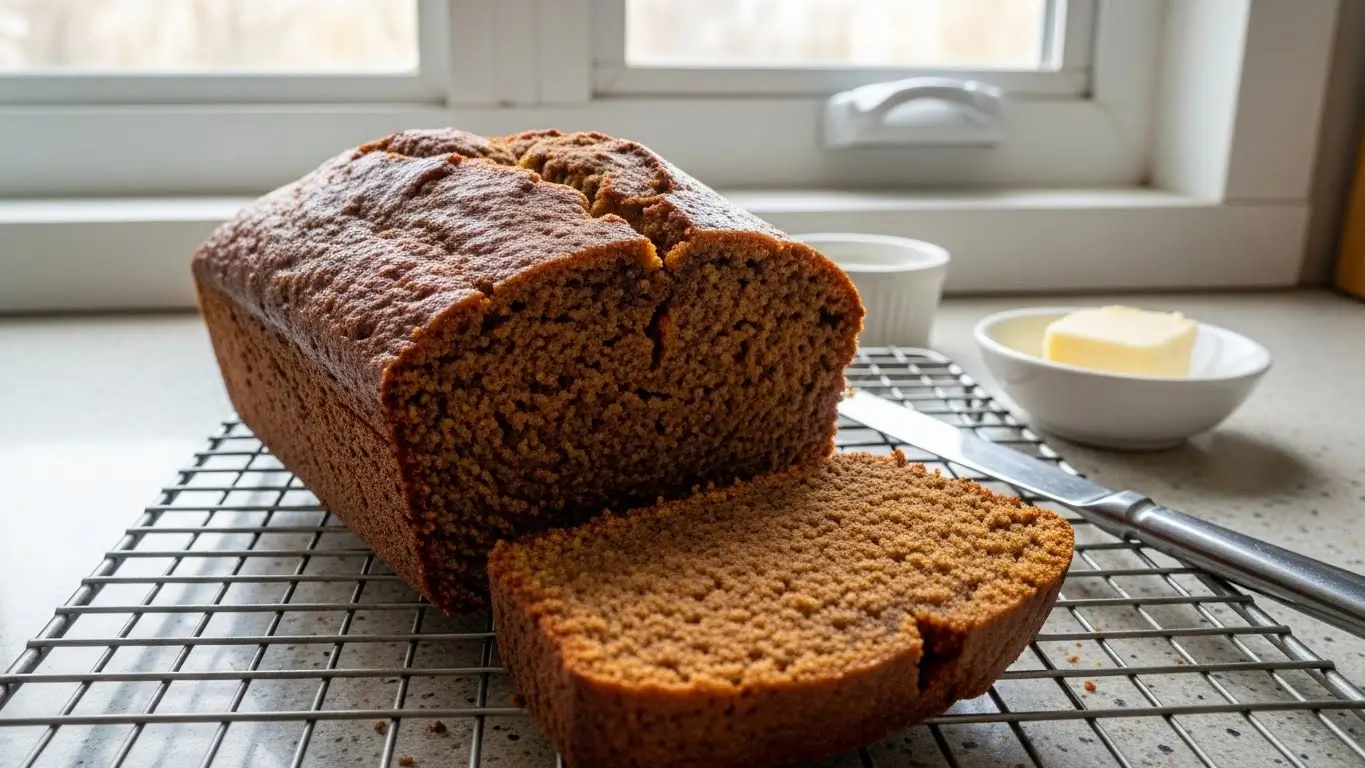
Moist gingerbread loaf is one of those things I kept trying to make and failing at for literally two years. I’m talking dense, dry, crumbly disasters that my family politely nibbled while clearly wishing they were eating anything else. But last December—or was it November? Whatever—I finally figured it out. And now this moist gingerbread loaf is what I bake when I want my house to smell like Christmas threw up in the best possible way.
Here’s the deal with moist gingerbread loaf: everyone has a recipe, and most of them LIE about the moisture level. “Oh it’s so moist!” they say, and then you bite into what’s basically spiced cardboard. Not this one. This recipe actually delivers on the promise. The key is molasses (obviously) but also—and this is crucial—not overbaking it. Which I did. Seven times. Before learning my lesson.
Also check : no-bake gingerbread cheesecake cups recipe
Why I Became Obsessed with Moist Gingerbread Loaf
So my obsession started when my neighbor Karen (yes, actually named Karen) brought over this incredible gingerbread loaf to a block party. I ate three slices. Maybe four. Look, I wasn’t counting. The moist gingerbread loaf was dark, sticky, perfectly spiced, and I needed to know how she made it. She gave me her recipe and I swear I followed it exactly, but mine came out completely different. Dry. Crumbly. Sad.
Turns out Karen’s oven runs cool and mine runs hot, so her 45-minute bake time was actually burning my loaves. Took me six attempts to figure this out. Six! My husband stopped eating gingerbread entirely for like three months because he was so traumatized by my failed experiments.
But the moist gingerbread loaf I make now? He actually requests it. That’s how you know I finally got it right.
What Makes This Moist Gingerbread Loaf Actually Moist
Okay, let’s talk science for a second. Or not science because I barely passed chemistry, but whatever makes this work. The moisture in moist gingerbread loaf comes from three things: molasses (duh), oil instead of butter, and a secret ingredient that’s gonna sound weird—coffee.
Wait, don’t leave! The coffee doesn’t make it taste like coffee. It just deepens all the spices and adds moisture. I found this out by accident when I used coffee instead of water because I was out of… water. How do you run out of water? I don’t know, but I managed it. And the gingerbread turned out AMAZING.
Also, brown sugar over white sugar. Always. The molasses content in brown sugar plus the actual molasses in the recipe creates this sticky, moist gingerbread loaf texture that’s almost cake-like but denser. In a good way. Not in a brick way like my early attempts.
Ingredients (And My Strong Opinions)

Dry Ingredients:
- 2 cups all-purpose flour (don’t use cake flour, it’s too delicate for this moist gingerbread loaf)
- 2 teaspoons ground ginger (fresh ginger doesn’t work the same, trust me)
- 1 teaspoon ground cinnamon
- 1/2 teaspoon ground cloves (a little goes a long way—I used a full teaspoon once and could taste nothing but cloves for days)
- 1/4 teaspoon nutmeg
- 1/4 teaspoon allspice
- 1 teaspoon baking soda
- 1/2 teaspoon salt
Wet Ingredients:
- 3/4 cup molasses (use the fancy unsulphured kind if you can find it—regular works too though)
- 1/2 cup brown sugar, packed (dark brown is better but light brown works)
- 2 large eggs (room temperature—cold eggs make the batter weird)
- 1/2 cup vegetable oil (or melted coconut oil if you’re fancy)
- 1/2 cup hot coffee or hot water (coffee makes better moist gingerbread loaf, I’m telling you)
- 1 teaspoon vanilla extract
Shopping for molasses in July is hilarious, by the way. The store clerk asked if I was “doing some early holiday baking” and I was like, no, I just want moist gingerbread loaf in the middle of summer. Is that weird? It might be weird.
Making This Moist Gingerbread Loaf (Step by Step, With All My Mistakes Included)
Step 1: Preheat and Prep
Preheat your oven to 350°F. Or if your oven runs hot like mine, maybe 340°F. Get a 9×5 inch loaf pan and grease it REALLY well. Like, don’t be shy with the butter or cooking spray. I also line the bottom with parchment paper because I’m paranoid about this moist gingerbread loaf sticking after the Great Sticking Incident of 2023. We don’t talk about that.
Step 2: Mix the Dry Stuff
In a medium bowl, whisk together flour, ginger, cinnamon, cloves, nutmeg, allspice, baking soda, and salt. Make sure there are no clumps. I usually sift mine because I’m extra, but you don’t have to. The spices should smell AMAZING at this point. If your kitchen doesn’t smell like Christmas, you did something wrong.
This is where you really notice what makes moist gingerbread loaf special—the spice combination. Don’t skip the cloves or allspice. Yes, they’re weird spices that you probably only use once a year, but they’re essential.
Step 3: Mix the Wet Stuff
In a large bowl (or your stand mixer if you have one), whisk together molasses and brown sugar. This is a workout, by the way. Molasses is THICK. Like, unnaturally thick. I’m convinced it’s what they use to trap flies.
Add eggs one at a time, mixing after each addition. Then add oil and vanilla. The mixture will look kind of separated and weird. That’s normal. Don’t panic like I did the first time.
Now here’s where it gets interesting—add the hot coffee. The key word here is HOT. Hot liquid helps create steam during baking which makes your moist gingerbread loaf actually moist. Cold coffee doesn’t work the same way. I tested this. Multiple times. Because I’m apparently a glutton for punishment.
Step 4: Combine Everything
Add the dry ingredients to the wet ingredients and stir gently until JUST combined. Do not overmix. Seriously. I cannot stress this enough. Overmixing is how you get tough, dense moist gingerbread loaf instead of tender, moist gingerbread loaf. Mix until you don’t see dry flour anymore, then STOP. There should still be a few small lumps. That’s fine. That’s good, actually.
The batter will be quite thin—like, thinner than you expect. I thought I messed up the first time because it looked more like brownie batter than cake batter. But thin batter = moist gingerbread loaf. Thick batter = hockey puck.
Step 5: Bake It
Pour the batter into your prepared loaf pan. It should fill it about 2/3 of the way. Smooth the top with a spatula if you care about aesthetics. I usually don’t because it’s going to crack anyway—all the best moist gingerbread loaf recipes have that rustic cracked top.
Bake for 50-60 minutes. But—and this is critical—start checking at 45 minutes. Every oven is different and I’ve learned this the hard way. Insert a toothpick into the center. It should come out with a few moist crumbs, NOT clean. If it comes out clean, you’ve overbaked it.
Here’s the thing about moist gingerbread loaf: it continues cooking after you take it out of the oven. So slightly underbaked is perfect. I usually pull mine when the toothpick has wet crumbs on it because I know it’ll finish cooking as it cools.
Set a timer. Then set another timer. Then maybe a third one because I ALWAYS forget and end up with overdone gingerbread if I’m not careful.
Step 6: Cool Completely
Let the moist gingerbread loaf cool in the pan for 15 minutes. This is torture because it smells incredible, but patience is key here. If you try to remove it too early, it’ll fall apart. Been there, cried about it.
After 15 minutes, turn it out onto a wire rack and let it cool completely before slicing. I know. I KNOW. You want to eat it warm. But warm moist gingerbread loaf is actually crumbly and falls apart when you cut it. Cold moist gingerbread loaf slices beautifully and has better texture.
Actually, you know what? This loaf tastes even better the next day. The flavors meld together and the moisture distributes evenly. I make mine the day before I want to serve it now.
Tips From My Many, Many Failed Attempts

Don’t Substitute the Molasses: I tried honey once. ONCE. It was sweet but lacked that deep, dark, slightly bitter flavor that makes moist gingerbread loaf taste like gingerbread. Honey makes it taste like weird spice cake.
Oil vs. Butter: Butter makes drier loaves. I know everyone loves butter and butter IS usually better, but not here. Oil creates moisture that lasts. Every recipe I found online that used butter produced drier moist gingerbread loaf. Science, probably.
The Coffee Trick: Cannot emphasize this enough. Hot coffee (or hot water if you’re anti-coffee) creates steam during baking. Steam = moisture. I’ve made this with cold liquid and it’s noticeably drier.
Check Your Baking Soda: If your baking soda is old (like, older than six months), your moist gingerbread loaf won’t rise properly. Ask me how I know. Actually don’t, it’s embarrassing.
Storage: Wrap this in plastic wrap once it’s completely cool. It stays moist for like 5 days on the counter. In the fridge, it lasts a week but gets a bit drier. I’ve also frozen slices and they defrost perfectly.
Glaze or No Glaze: Sometimes I make a simple glaze (powdered sugar + milk) and drizzle it on top. Makes it look fancy. Doesn’t really add much to the flavor, but people are impressed. Other times I just dust it with powdered sugar. Or nothing. It’s good all three ways.
Common Disasters and How to Avoid Them
Disaster 1: The Sinking Middle This happened when I opened the oven door too early. The sudden temperature drop makes the center collapse. Don’t open the door until at least 40 minutes in, no matter how tempted you are to check on your moist gingerbread loaf.
Disaster 2: Crumbly Edges This is from overbaking. The edges cook faster than the center, so if you bake until the toothpick is completely clean, the edges will be dry. Pull it when there are still moist crumbs on that toothpick.
Disaster 3: Dense and Heavy Usually from overmixing the batter or using old baking soda. Mix gently and check your leavening agents are fresh. Your moist gingerbread loaf should be dense-ish (it’s not angel food cake) but still tender.
Disaster 4: Stuck in the Pan Grease. That. Pan. Seriously. I also line the bottom with parchment paper now. Once you’ve had to dig out a moist gingerbread loaf with a spoon because it won’t come out, you learn.
Why This Recipe Works When Others Don’t
Most moist gingerbread loaf recipes online are lying. They’re dry but people call them moist because… I don’t know, maybe their definition of moist is different? This recipe actually produces a sticky, tender, genuinely moist loaf because:
- High molasses content (some recipes skimp on this)
- Oil instead of butter
- Hot liquid for steam
- Slightly underbaked (by traditional standards)
- Brown sugar adding extra moisture
I’ve tested at least twelve different recipes and this is the only one where someone has said “Wow, this is actually moist” without being polite. My teenager even ate it without complaining, and she thinks everything I make is “mid” or whatever the kids say now.
Serving Suggestions From Real Life
This moist gingerbread loaf is perfect with:
- Coffee (obviously)
- Tea (my mom’s favorite pairing)
- Whipped cream (for fancy occasions)
- Cream cheese frosting (controversial but delicious)
- Just plain, standing over the counter at midnight (no judgment here)
My dad likes it toasted with butter. I think this is weird but he swears by it. The edges get crispy and the inside stays soft. I’ve tried it and… okay fine, it’s good. Don’t tell him I admitted that.
Some people—and I’m looking at you, Lisa from book club—like to add chocolate chips to moist gingerbread loaf. I haven’t tried this because it seems wrong, but she brings it to every meeting and people devour it, so maybe she’s onto something?
Final Thoughts on This Journey
I cannot believe I spent two years perfecting moist gingerbread loaf. TWO YEARS. I could have learned a language or something useful. But no, I was determined to make gingerbread that didn’t taste like a dry sponge soaked in spices.
Was it worth it? When people ask for the recipe and actually make it and then text me photos saying “OMG THIS IS SO GOOD”—yeah, it was worth it.
Is this the exact same moist gingerbread loaf my neighbor Karen makes? Honestly, I think mine’s better now. But I’ll never tell her that because she’s lovely and shares her garden tomatoes with me.
The best part about finally nailing this moist gingerbread loaf recipe? I can make it year-round without it being weird. Summer gingerbread is a thing I’ve decided. Everyone else can deal with it.
If I can perfect this after burning it, drying it out, and generally making it sad for two years straight, you can definitely make it successfully on your first try. Just follow the instructions, don’t overbake it, and remember that slightly underdone is better than overdone when it comes to moist gingerbread loaf.
Now excuse me while I go make another batch because writing this made me crave it. Again.
Happy baking! (and may your gingerbread never be dry) 🎄☕
Table of Contents
Moist Gingerbread Loaf
This incredibly moist gingerbread loaf features deep molasses flavor, warm spices, and a secret coffee ingredient that keeps it tender for days. Dark, sticky, and perfectly spiced—this easy recipe produces bakery-quality results with simple ingredients. Better than any store-bought version.
Ingredients
- 2 cups all-purpose flour
- 2 teaspoons ground ginger
- 1 teaspoon ground cinnamon
- 1/2 teaspoon ground cloves
- 1/4 teaspoon nutmeg
- 1/4 teaspoon allspice
- 1 teaspoon baking soda
- 1/2 teaspoon salt
- 3/4 cup molasses (unsulphured)
- 1/2 cup brown sugar, packed
- 2 large eggs, room temperature
- 1/2 cup vegetable oil
- 1/2 cup hot coffee or hot water
- 1 teaspoon vanilla extract
Instructions
-
Step 1Preheat oven to 350°F (175°C). Grease a 9x5 inch loaf pan thoroughly and line bottom with parchment paper.
-
Step 2In a medium bowl, whisk together flour, ginger, cinnamon, cloves, nutmeg, allspice, baking soda, and salt until well combined and no lumps remain.
-
Step 3In a large bowl or stand mixer, whisk together molasses and brown sugar until combined.
-
Step 4Add eggs one at a time to molasses mixture, mixing well after each addition. Add oil and vanilla extract, mixing until combined.
-
Step 5Pour hot coffee into wet ingredients and stir to combine. The mixture may look slightly separated—this is normal.
-
Step 6Add dry ingredients to wet ingredients and stir gently until just combined. Do not overmix. Batter should be thin with a few small lumps remaining.
-
Step 7Pour batter into prepared loaf pan. Smooth top with spatula if desired.
-
Step 8Bake for 50-60 minutes, checking at 45 minutes. Insert toothpick into center—it should come out with moist crumbs, not clean. Do not overbake.
-
Step 9Let loaf cool in pan for 15 minutes, then turn out onto wire rack.
-
Step 10Cool completely before slicing for best texture. Loaf tastes even better the next day after flavors develop.